Think Fast, Move Faster | LoopMe’s Sports Marketing breakfast

We’re excited to launch our first vertical session of 2018, which takes a deep dive into sports marketing on Jan 24th . RSVP to secure your spot here.

The value of sports marketing                                        Pic

According to Forbes, the most valuable sporting event in the world is the Super Bowl, worth approximately $663 million. This is $244 million more than the Summer Olympics Games, while the Winter Olympics completes the top 3.

Interestingly, the UEFA Champions League is the only specifically European based event that makes the top 10.

‘Moment marketing’, which delivers advertising at a specific time is most common around sports events. 61% of digital brand marketers said that they used sports events to trigger digital campaigns.

But far from sticking to TV and the traditional 30-second spot, sports marketers are turning to different platforms and devices to distribute their video content.

What does this mean?

With the Winter Olympics, the World Cup and the Champions League all taking place in 2018, this event will help you plan ahead.

In this jam-packed agenda we’ll be ‘bouncing’ through the following:

–     Case studies of effective sports marketing

–     How to harness data for targeted & effective marketing

–     What brands can do to stand out in a highly cluttered sports sponsorship environment

RSVP here to be the first to hear about speaker details. ‘Ping’ us a message if you have any further questions. We look forward to seeing you there!

No.62 In Deloitte’s 2017 EMEA Fast 500

Following from our ranking in Deloitte Fast 50 UK at no.12, LoopMe have also been announced at no.62 in the EMEA Fast 500 list.

The Deloitte Technology Fast 500™ EMEA program is an objective industry ranking that recognizes the fastest-growing technology companies in Europe, the Middle East, and Africa (EMEA) during the past four years.

The program is supported by the Deloitte Technology Fast 50 initiatives, which rank high-growth technology companies by location or specifically defined geographic area.

Now in its seventeenth year, the Deloitte Technology Fast 500 program includes regional rankings for North America and Asia-Pacific as well as EMEA. Check out the full shortlist here. 

‘This is a fantastic way to round off 2017, and we’re delighted to have been ranked so highly,’ commented LoopMe CEO and Co-Founder, Stephen Upstone. ‘Congratulations again to our team, who have worked hard to develop AI driven products that meet marketer needs.’

Gear up Your Mobile Advertising Efforts for 2018 Winter Olympics

Much has changed in the 4 years since the last Winter Olympics, so why keep your advertising the same? The Sochi Olympics broke records with a total of 3.3 billion streaming minutes; but with mobile streaming on the rise, now is the time to move your advertising efforts to mobile.

Here are five reasons why your advertising efforts for the 2018 Pyeongchang Winter Olympics should skew toward mobile:

  • Time spent watching TV is on a steady decrease, with a drop of viewership dropping by roughly 30 minutes.
  • According to GeoMarketing, in 2014 average time spent on mobile per day by US adults rose from 2 hours and 37 minutes to a projected 3 hours and 23 minutes in 2018.
  • 56% of viewers choose streaming because it allows them to watch the events live while they happen, while 50% choose streaming due to the convenience of on demand.
  • Even when a viewer isn’t streaming on mobile, they’re still using their mobile devices. While viewing, 59% are using their smartphone and 47% are using their tablet.
  • Approximately 30 million Americans watched NBC’s coverage of the Olympics opening event. Many viewers choose to watch the event at the bar but still, 81% of Americans spend time looking at their phones while dining out.

These stats will also be useful when considering your advertising strategy for the upcoming World Cup and other major sporting events.

Sources: GeoMarketing, eMarketer, NBCSportsGroup and Deloitte via Time


Holy Frap: How Starbucks is using data to increase customer acquisition

This is our last instalment of our ‘Data Champions’ series which looks at those championing ‘big-data’ and using it to achieve their business objectives. Read our earlier blogs which look at Under Armour and Morrisons.

Starbucks is approaching its 50th anniversary, but have recently adopted AI to improve their offering.

Dubbed the ‘digital flywheel’ strategy, it looks to improve their store sales through their Starbucks Rewards programme, which currently accounts for 36% of US company-operated sales.

It’s designed to boost customer acquisition and spend-based rewards, offering personalised consumer offers.

Using algorithms Starbucks can look at numerous factors and data sets (including order history, time of day, current weather conditions, location and more!) to make suggestions via push notifications from their app.

Crucially, Starbucks have recognised that their mobile customers are receptive to these schemes. With this in mind, they’ve designed an app with the sole purpose of driving customer loyalty.

Starbucks have really grasped the idea of ‘value exchange’ with consumers giving their personal data to Starbucks regularly in return for discounted products.

Not only is the programme a way in keeping up with a mobile-first world, it also shows how companies can create personalised experiences to encourage loyalty.xMAS

A recent report by KMPG said that ‘customized promotions’ helped to influence customer loyalty. Millennials are the most receptive to personalised promotions with 29% of respondents saying that it creates loyalty between them and a brand. Gen X and baby boomers were 28% and 25% respectively.

Matthew Ryan, Global Chief Strategy Officer at Starbucks commented on how this strategy had benefited them:

“The data is clear that when we acquire a new customer, the act of signing up for a digital relationship results in a sudden and sustained lift in spend as measured by careful pre-post tracking.”

“That’s how we’re able to drive so much value from a relatively small portion of customers, 13.3 million active reward customers compared to a total of approximately 75 unique customer visits to our stores each month. We know that even modest increases in the total universe of active customers drive tremendous long-term value.”

Under Armour, Morrisons and Starbucks are three of thousands of companies using data to enhance their business.

Find out how you can use data and AI to support your marketing goals: contact@loopme.com 

LoopMe win 2 awards at the IPA Media Owner and Ad Tech Awards

We’re thrilled to announce that last night we were awarded ‘Best Technology Innovation’ for PurchaseLoop and ‘Best Unfeatured Media Owner’ at the IPA Media Owner and Ad Tech Awards.

These awards showcase best practice in levels of service that online media owners and ad tech companies provide to agencies, with the aim of raising the digital standard.

The judges awarded ‘Best Technology’ for PurchaseLoop which uses Artificial Intelligence to optimize online campaigns to brand metrics.

Amy Lawrence, Head of Digital Investment at MediaCom praised the strength of the all the entries but said that PurchaseLoop stood out as it addressed a problem within the media industry and showed tangible results.

Based on our submission and judged by a panel of industry experts, LoopMe were also awarded ‘Best Unfeatured Company’.

Kate Astall, Head of Digital Marketing at Zurich Insurance praised LoopMe for our technology within an emerging space and for our partnership with agencies which ultimately offers value to the client.

Well done to all the winners! To find out more about LoopMe and PurchaseLoop get in touch.

29-November-Group-Photo (1)

Connected TV – Welcome to the Marketing Mix

In 1939, David Sarnoff, a pioneer of TV and radio described the TV as “A new art and new industry which will eventually provide entertainment and information for millions”. He was right. Over 75 years later, it’s now a feature in many homes and influence on popular culture.

November 21st marks World TV Day, first established in 1996 by the UN’s General Assembly in recognition of the increasing impact television has on society. Since its inception, the way we consume TV has drastically changed, especially as new devices have risen in popularity.

In recent years connected TV, (also known as a hybrid or smart TV) is the latest trend to impact advertising. As marketers, we look for what captures consumer attention and so connected TV should now be respected as part of the marketing mix.

Mass adoptionPicture 1

According to a report conducted by eMarketer, the US are leading the way in mass adoption for connected TV, with over 202 million users. This is a 51 million increase in just under 5 years.

Currently 69.5% of US internet users own a connected TV, an 18% increase in two years.

Picture 2The UK is also adopting smart TVs rapidly, with 59% of households owning one. This figure is just behind Denmark and Norway whose smart TV adoption is 60% and 63% respectively. 


Attractive benchmarks

Picture 3

Another telling stat for marketers is around increased engagement levels. The ‘Extreme Reach’ report looked at digital video ad benchmarks worldwide which indicated that VCR on connected TV is 94%, due to their non-skip format and full-screen experience.

Co-Viewing

Connected TV fits in well with other devices. According to the IAB’s recent research, consumers are more likely to discuss brands and products they see on over-the-top (OTT) advertising compared to linear TV. 45% of respondents even went as far to say they would ‘change someone else’s mind about a product/brand they see’ when co-viewing a OTT platform. This is compared to just 36% of respondents asked the same for linear TV.

Picture 4In recent years there’s also been a huge rise in multi-screen viewing, with consumers using their phone while watching TV. 22.6% of UK consumers watch TV on multiple devices and this is Picture 5expected to rise. This means that marketers are looking to spread their ad budget between different platforms, understanding consumers have multiple touch points throughout the day.
Get in touch with your local account rep or contact us here to learn more about LoopMe’s cross-screen solutions.

How LoopMe drove purchase intent programmatically for Microsoft

The LoopMe Awards celebrate the best in AI-optimised mobile video advertising. These campaigns have used artificial intelligence in combination with PurchaseLoop, LoopMe’s brand optimization product, to deliver enhanced campaign results and fulfil brand marketing objectives.


Brand: Microsoft
Campaign: Microsoft HP Spectre x360
Agency: The Story Lab


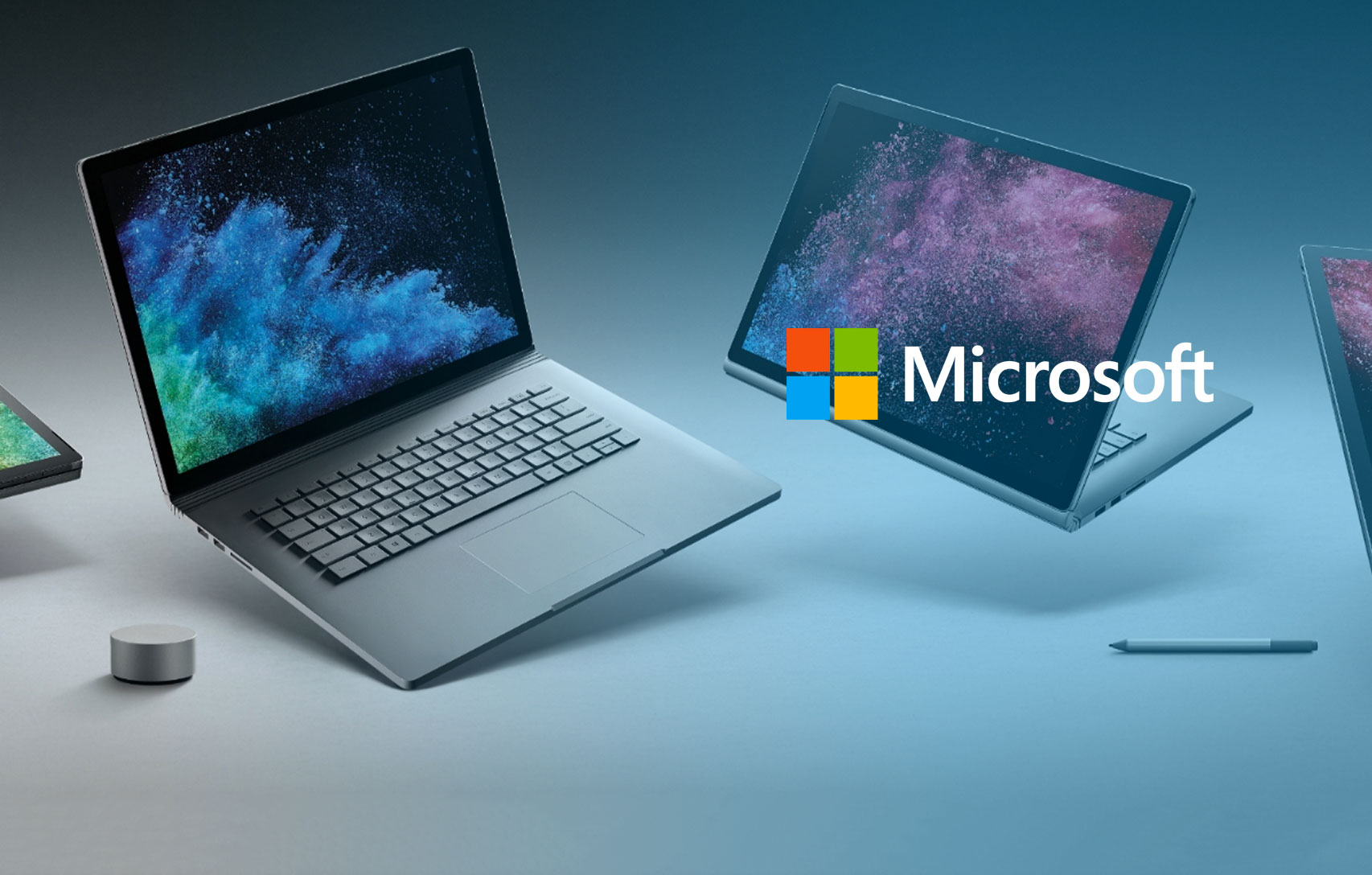
LoopMe worked with The Story Lab; the entertainment division of Dentsu Aegis, to develop an effective mobile video marketing campaign, for the distribution of content showcasing the new Microsoft HP Spectre x360 Convertible laptop. The Story Lab collaborated with LoopMe to distribute 15 and 30 second teasers of the Microsoft video content to a bespoke audience created within LoopMe’s Data Management Platform, in order to add scale, drive users to the full-length content and increase consumer purchase intent.

LoopMe devised a strategy that would combine Artificial Intelligence to optimise towards the campaign KPI’s, and programmatic delivery via an Amnet PMP, which ensured that The Story Lab had visibility on delivery, performance and brand-safety.

While the campaign delivered over 2 million impressions across mobile and tablet, the real value was in the uplift to the brand KPIs through AI.

The campaign benefitted from using LoopMe’s latest product, PurchaseLoop. Using data points unique to mobile, PurchaseLoop uses artificial intelligence modelling to upweight delivery towards brand metrics. For this campaign it was optimised to purchase intent in real-time, moving consumers further along the purchase funnel through content engagement.

As the first campaign globally to combine AI brand optimisation in real-time with a programmatic buy, LoopMe delivered an innovative mobile campaign for Microsoft which achieved both brand & business KPIs, most notably a 41% increase in purchase intent and 165% increase in CTR.

The Stats You Need to Know Before Black Friday

With only one Friday left, Black Friday and  Cyber Monday will be here before we know it! Now is the time to gear up your advertising efforts, as 35% of consumers plan to spend on Black Friday and 30% plan to shop on Cyber Monday.

The dollars are at stake for advertisers and brands have been growing continuously over the years. Last year, Americans spent $3.34 billion on Black Friday, with an average of $300 spent throughout Thanksgiving weekend, and shoppers in the UK spent £2.9 billion.

It’s no secret that mobile is becoming an increasingly important area of focus for brands when trying to reach potential spenders. This trend holds especially true during the holidays. Last year, Americans set a new record by spending $1.2 billion via mobile on Black Friday. This year, it’s estimated that 63.5% of Americans plan to shop digitally on Cyber Monday to take advantage of online-only deals from major retailers leading the game, like Amazon and Target. In general, over 75% of Americans plan to use their mobile devices for shopping at some point during the Holiday season.

In the UK, Black Friday spend is rising. With 31% of consumers plan to spend in November, 19.4% in the first half of December and 3.8% in the second half. Most consumers will be very present on mobile, with 62% scouting products on mobile and 56% monitoring deals, mobile ad spend is increasingly important during the holiday season.

What does this mean for advertisers?

  1. Now is the time to invest ad spend on mobile, as most consumers are spending their time on mobile researching and monitoring products.
  2. Prepare websites for increased visitation as websites can experience 5x higher web traffic on Black Friday.

For more data and insights, download your free UK & US holiday one sheets.

When do robots get rights?

That’s one of the questions Dr Ron Chrisley, Director of the Centre for Cognitive Science at the University of Sussex addressed at Mindshare Huddle.

Interviewed by Jack Edmonds, LoopMe’s Head of Agency Sales, Ron’s experience with Artificial Intelligence mean that he was perfectly placed to educate us about the impact AI is set to have on our society.


There is no general AI

At present, general AI doesn’t exist. General AI is the idea that a machine can successfully perform any task that a human being can, whereas narrow AI is focused on just one task.

Even the likes of Google DeepMind – as sophisticated as it is – are still forms of narrow AI.


Defining consciousness is problematic

Garfield said that consciousness is the period between naps. But as Ron pointed out, we should probably have a better definition than that.

Current approaches don’t go far enough, such as ones which define consciousness based on behaviour. Ron critiqued this by pointing out that currently chatbots can mimic the ways in which humans talk, but these are far from being conscious, even if users aren’t aware that they’re talking to a robot.

However, there won’t be the need to treat AI as human or conscious for the foreseeable future.


Robots won’t take over the world

The core ethical question should not be whether there be a robot takeover. This isn’t something we should consider for the next 50-100 years.

However, discussing robot rights is likely to become more prominent. Ron also welcomed governments and private companies looking into the ethical implications, as this will ensure that AI is not being scapegoated for actions that humans are responsible for.

He added that everyone should be involved in discussing what counts as an ethical deployment of AI, and that it shouldn’t be left to one trade body, company or government to make this decision.


Education is needed

Much of the concern about AI is due to misinformation. Jack used a stat that 52% of people get their knowledge of AI from TV and films, so it’s not surprising that many have a less than positive idea about the impact that AI has in society.


AI will transform our lives

While there is a lot of negativity around AI (mainly due to a lack of education), Ron was keen to stress the great impact that AI can have. Developments in technology will transform (and are transforming) our lives, from tech, health care and even in advertising.


The sky is the limit.


Thanks to all who came along! Learn more about LoopMe at www.loopme.com

LoopMe & ads.txt

We welcome the IAB’s recent ads.txt initiative to tackle fraud within the ad industry, and we’re encouraging all our publisher partners to adopt this initiative to increase transparency in the ecosystem.

Through adopting ads.txt, buyers have full transparency and are easily able to identify authorized sellers for ad inventory for each given domain.

Each ads.txt file contains a list of authorised ad buyers, the assigned publisher ID for inventory within the platform and the type of relationship the publisher has with the ad buyer.

This is stored in the root folder of the publisher’s domain and will be accessible to all when accessing publisherdomain.com/ads.txt

Get in touch with your local AM or contact supply@loopme.com to add LoopMe to your ads.txt file.