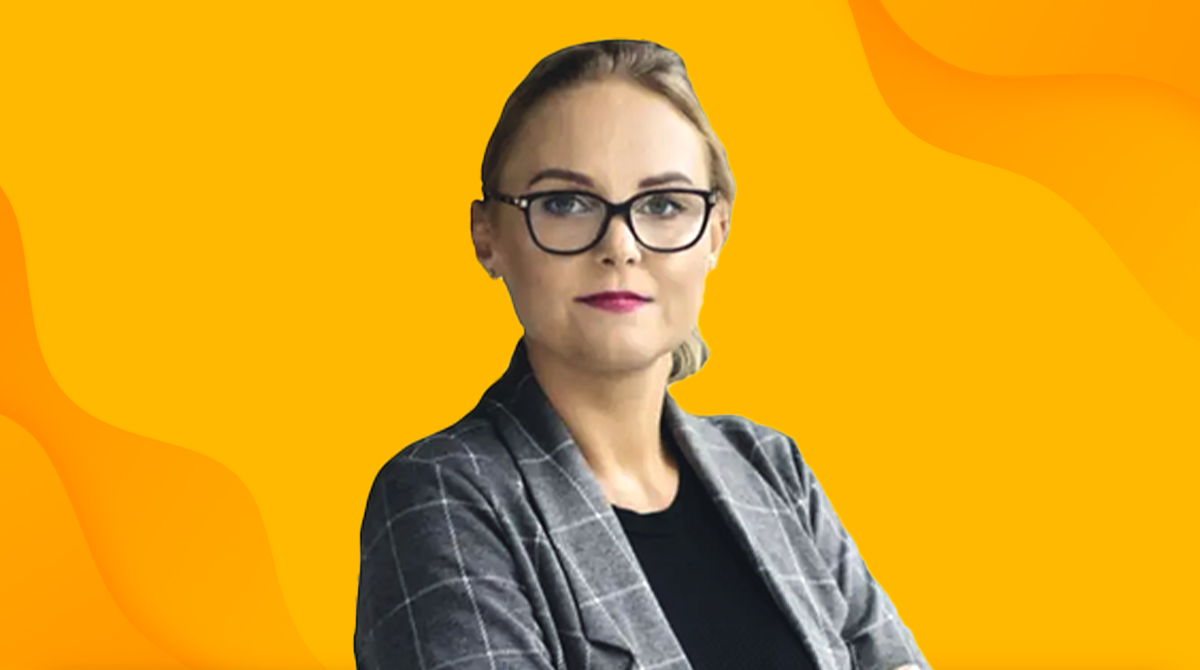
Singapore-based Sales Director Aby Carandang offers an insight into her career in adtech, what she likes to listen to, and her plans to go hiking in Nepal.
Why did you decide to join LoopMe? I have been in advertising for my whole career and have had the opportunity to work in various adtech spaces like social media, data sales, SSPs, and media agencies. I got excited about the role at LoopMe because it allowed me to return to programmatic sales and be at the centre of AI growth in adtech. LoopMe also opened me to the challenges of stepping into a regional role where I am constantly learning about South East Asia and how the industry varies across the region.
What project or event has been your favourite at LoopMe? I have a few favourites in mind; I think the SEA team just makes everything fun, but our sponsorship with Dentsu Malaysia last year stands out. I not only got to represent LoopMe on the main stage, but I also enjoyed the dynamics of our team! The day was buzzing with great energy and client engagement!
Do you have any WFH routines or rituals? As a must-have first thing in the morning, I like planning out my day with a cup of coffee. Whenever I can, I will walk to pick up lunch; then, it’s Spotify playlists all day for me. I listen to everything, including true crime podcasts while working.
Tell us a bit about yourself. I am Aby or Abigael. I am a Sales Director for LoopMe APAC. I am originally from the Philippines and I moved to my second home, Singapore, over a decade ago and have been living here since, with my husband Harold. I love to travel and explore towns by running around and people-watching in cafes! I strongly believe in work-life balance. My latest mantra is to ‘Plan the fun first,’ which helps me focus and be more intentional at work.
Do you have any hobbies? Yes, I like activities that allow me to focus like puzzles, baking and gaming (if I have time). I also like to move! I run and do yoga, and I have recently become hooked on hiking. I am currently training for my biggest hike to date in Nepal! Wish me luck!
If you could invite any public figure to dinner, who would you choose and why? I would invite Conan O’Brien – I think he is an intelligent, funny person and it would be cool to hang out with him. I have a lot of questions about the characters from his late night show. If he is not available, I will be inviting Fred from Fred Again so I can sample his latest music.
Aleksandra Meller, LoopMe’s Office Manager & Executive Assistant based in Krakow, discusses her motivations, her passion for gardening, and why she loves Italy.
Why did you decide to join LoopMe? During my job search, I came across an opening at LoopMe and realized a former colleague was already working there. I have very fond memories of our time working together, so I reached out to hear her perspective. She gave me excellent feedback about the company and kindly offered to recommend me for the role. This personal connection and her strong recommendation were key factors in my decision to apply for this specific position.
What project or event has been your favourite at LoopMe? This year’s Company Day was a standout success! While we celebrate differently each year, I decided to prioritize a first aid training session, covering CPR, choking protocols, and wound care. To balance out the day, we followed the training with a local vineyard tour and wine tasting. Feedback from employees was overwhelmingly positive, highlighting the value of the life-saving skills learned. Eddie Peterson, LoopMe’s SVP Global Engineering, also came over from New York for the event, which made the atmosphere even more special.
What motivates you to come to work? What constantly motivates me is positive feedback from our team; seeing them truly enjoy and appreciate the events I organize is incredibly rewarding. I am also deeply inspired when guests comment that we have the best office and that the space has a unique “soul.” Knowing that I’ve created an environment that feels welcoming and alive drives my commitment to excellence. These reactions confirm that my work goes beyond logistics — it’s about building a place where people truly want to be.
Do you have any hobbies? I’m a big fan of gardening! There’s something truly rewarding about planting a small bulb and watching it grow into a beautiful tulip. It’s a process that brings me a lot of joy. I also love taking long forest walks with my beloved dog — it’s my favorite way to recharge and enjoy nature.
What has been your greatest achievement in the last year? One of my proudest moments at LoopMe was winning the ‘Looper of the Year’ award. I am deeply touched that my coworkers valued my efforts enough to vote for me. This recognition is a huge motivation, and it’s wonderful to feel that the heart I put into organizing events and managing the office is truly noticed and appreciated.
If you could live anywhere in the world, where would you choose and why? I would choose Italy, without a doubt! I am absolutely in love with the Italian language, their rich culture, and the stunning historical sites. From the beautiful climate and Mediterranean greenery to the breathtaking beaches and, of course, the incredible food — Italy has everything I love. It’s a place that perfectly blends history, natural beauty, and a wonderful lifestyle.
To find out more about life at LoopMe and our open vacancies, please visit our careers page.
Vũ Châu, a Senior Android Engineer based in Pennsylvania, talks about problem-solving, classical music, and more.
What motivates you to come to work? I genuinely enjoy helping my team tackle problems every day and seeing our solutions come to life in unexpected ways. There’s always something new to learn, and I love applying my skills to deliver real impact.
Can you discuss a skill you’ve acquired or developed while working at LoopMe? LoopMe has given me the opportunity to develop my AI engineering skills in a hands-on, practical way. I’m not only refining my efficiency with AI tools daily, but also sharpening my development abilities to help myself, my team, and the broader organization.
Do you have any WFH routines or rituals? I tend to reach for my classical music playlists when tackling tough problems. A dose of Chopin really helps me focus.
Do you have any hobbies? I enjoy street photography, especially with my new Ricoh GR IV that I brought along on a recent trip to Vietnam. At home, I’m usually working through my enormous Audible collection—mostly WWII history titles.
If you could live anywhere in the world, where would you choose and why? Hands down, Vietnam. It’s where I was born and grew up, and the country I return to most often these days. The cuisine is top-notch, the culture is vibrant, and—last but not least—it’s where I met my wife.
If you could invite any public figure to dinner, who would you choose and why? Stephen Hough, the acclaimed English classical pianist. I actually had the chance to hang out with him once, and I’d love another opportunity to hear his perspectives on music and life.
Want to join the LoopMe team? Take a look at our open positions.
We’re excited to share that LoopMe has secured a new patent, the third for our Intelligent Marketplace, bringing LoopMe’s total patent count to six, with a further twelve pending.
Our newly issued patent titled “Automated Hybrid, Optimized Advertising Auction System and Method” acknowledges how LoopMe connects supply and demand in programmatic auctions.
The patented technology plays a foundational role in the ability of LoopMe’s multidimensional bid optimization algorithm to dynamically set bid floors and margins. This enables advertisers to reach audiences with greater precision while maximizing performance and value across LoopMe’s exchange.
“This new patent is another strong validation of our long-term investment in proprietary, AI-driven advertising solutions that deliver real impact for partners across the digital ecosystem,” commented LoopMe Chief Data Scientist Leonard Newnham.
With dedicated data science and engineering teams, LoopMe is focused on developing cutting-edge AI to create better decision making in real time from the best data sets available.
Lessons from rolling out agentic AI across a real engineering organisation
Generative AI is reshaping software engineering—but not in the way most people expect. The narrative often goes like this: give developers an AI assistant, plug in a code agent, add GPT-5, and voilà—productivity skyrockets.
Reality is far more nuanced.
At LoopMe, our 20-person Data Science team sits inside a 400-person adtech company, and we’ve spent the last 18 months operationalising GenAI for real engineering work. We’ve lived through the hype cycle, the scepticism, the false starts, and the breakthroughs. And we’ve learned what truly boosts velocity—and what simply doesn’t.
This isn’t a theoretical article. It’s based on actual adoption, real code, real pull requests, real frustrations, and real wins.
Here’s what happened.
We started early—but usage was uneven
Our first experiments began with JetBrains AI Assistant inside PyCharm. Some developers used it constantly. Others ignored it. Most used it like a slightly cleverer StackOverflow: helpful, but not transformative.
Then agentic tools emerged, like JetBrains Junie, and access broadened to the frontier models: GPT-5, Claude 4.5, Gemini 2.5.
Surely now everyone would embrace AI coding? They didn’t. Better tools alone didn’t change behaviour. We needed something else.
We made AI usage visible—but safe
We introduced two simple conventions in every pull request:
##AI: <percentage>
##Junie: <percentage>
This showed how much of the code was AI-assisted. Then we built (using agentic AI!) a Python script to scrape all pull requests after each sprint so we could track usage trends over time.
Crucially, we didn’t use this for micromanagement. We didn’t publish a leaderboard of “low adopters.” We didn’t shame anyone.
Instead, at our bi-weekly Data Science meeting, we recognised the top three “AI wizards”. Nothing heavy. No pressure. Just positive reinforcement.
Did it increase adoption? Yes—significantly.
Making AI usage visible but not punitive was one of the biggest cultural unlocks.
We discovered something bigger: GenAI requires a different way of coding
The biggest surprise was this: using an AI assistant effectively changes how you think about coding, not just how fast you type.
Traditional coding: “What’s the function I need to write?”
AI-accelerated coding: “How do I frame the problem so the agent can solve 80% of it without derailing itself?”
Teams had to learn a new skillset:
How to define achievable, bounded tasks
How to avoid overly vague or overly ambitious prompts
How to detect when the AI is spiralling into over-engineering
How to guide the agent back to the real objective
How to evaluate its output as ruthlessly as you’d evaluate a human
The people who mastered this new mental model saw the biggest productivity gains—sometimes shaving weeks off tasks.
AI became more than boilerplate: it suggested entirely new ideas
Many assume coding agents are mainly good for scaffolding, refactoring, and tests. That’s not what we saw.
We repeatedly got suggestions like:
“This smoothing can be stabilised with a Laplace prior.”
“This optimisation resembles a convex projection problem—try XYZ.”
“Use sparse matrices here; complexity drops from O(n²) to O(n).”
These weren’t regurgitated snippets from StackExchange. They were genuinely creative algorithmic insights. The models, with their vast exposure to techniques and patterns, often offered ideas none of us had considered.
When that happened, the team started to trust AI as a thinking partner—not just a typing assistant.
We also learned what absolutely doesn’t work
1. Expecting usage to rise automatically as models get better
Switching to GPT-5 didn’t magically increase adoption. Nor did adding Claude 4.5 or Gemini 2.5. Tools don’t change behaviour. Rituals do.
2. Letting AI usage remain a private, individual habit
Without visibility, adoption stalls. People think “no one else is doing this,” or “maybe this isn’t allowed,” or simply forget to use it.
Making usage socially normal—without pressure—was essential.
3. Expecting AI to control its own scope
Agents happily generate complexity: elegant abstractions, nested class structures, entire architectures that solve a problem you don’t have.
Humans still need to:
keep the scope tight
prune complexity
recognise dead ends
apply context
GenAI accelerates everything—including going in the wrong direction.
The biggest surprise: junior team members adopted GenAI fastest
We’ve had several data analysts transition into full data scientists. They learned most of their heavy coding with GenAI tools. For them, “AI-first coding” isn’t a shift—it’s the default.
Meanwhile, some experienced engineers were slower to adapt. Not because they’re less capable, but because their muscle memory is stronger.
This mirrors what we hear across the industry: the next generation of engineers will expect AI-first workflows by default.
Gamification helped more than we expected
Every two weeks, we showed:
The trendline for AI usage
Sub-team progress
The top three AI power users
This turned adoption into something fun and social. Everyone improved, and usage rose naturally—without any of the politics or resentment that naming-and-shaming would have caused.
So… did productivity actually improve?
Early signs say yes. We’re seeing:
More high-quality, peer-reviewed code
Faster prototyping
Faster refactoring
Faster “first viable attempt” at new tasks
Significant speedups in complex optimisation work
Anecdotally, several multi-week tasks were completed in days. Quantifying pure productivity is tricky, but the qualitative evidence is strong.
GenAI isn’t just a tool—it’s a new engineering discipline
The organisations that treat it as such will move faster than those waiting for “the perfect agent” to arrive.
The teams that win will be the ones that:
Make usage visible and celebrated
Teach engineers how to think differently
Use AI for thinking, not just typing
We’re still early in this transition—but the velocity curve is bending in the right direction.
If you’re adopting GenAI in your engineering team, I’d love to hear what’s worked (and what hasn’t) for you.
Scarlett Quick, a Sales Manager based in London, talks about her team, navigating challenges with confidence, and why she would love to live in Cape Town.
What motivates you to come to work? My team! I’m lucky enough to work closely with the most amazing people, and with so many other hardworking, driven colleagues all focused on achieving goals and delivering value in everything we do. We all love a good chat and are definitely the loudest team – kitchen waffle and snack reviews are a regular occurrence!
Can you discuss a skill you’ve acquired or developed while working at LoopMe? Working in sales at LoopMe builds resilience in a big way. You’re constantly balancing fast-moving campaigns, shifting client priorities, and the ever-evolving world of AI-driven advertising, which often means adapting quickly. Every brief, meeting, win, and loss teaches you how to stay calm under pressure, think creatively, and bounce back with solutions instead of stress. I’ve learnt to navigate challenges with confidence, communicate clearly even in tricky situations, and stay motivated in a competitive market.
Do you have any WFH routines or rituals? I always try to start my day with a walk before work, even just a quick half hour makes all the difference. I’m a big list-maker, so I usually map out my priorities or block time in my calendar to stay focused and guide the day. And of course, a good playlist is essential! You’ll usually find me listening to a Feel-Good Sunday Mix on Spotify. I’m also never too far from my dog, Bertie, who usually works right by my feet.
Do you have any hobbies? I love festivals and live music, and I’m a big foodie! Half my week and weekends are spent eating out or trying new restaurants or pop ups. Travel is a must, I’m always planning trips to try new places, most recently Switzerland (highly recommend), with plenty more on the list! I also enjoy the simple things, like weekend walks or little spontaneous days out, so there’s always something to look forward to.
If you could live anywhere in the world, where would you choose and why? If I could live anywhere in the world, it would be Cape Town. I’ve been lucky enough to visit a few times now, and somehow the food, scenery, and people get better each time. The backdrop is amazing from every view point, easily one of the most beautiful places I’ve ever explored. Australia is also very high on my list… maybe one day!
If you could invite any public figure to dinner, who would you choose and why? It would have to be Adele. I’ve been lucky enough to see her live twice, and she just feels like someone you could genuinely chat to and bounce off for hours. She’s hilarious, and that cackle of hers… paired with mine, might be a bit much in one room! And of course, she would have to sing something from her 19 and 21 albums – non-negotiable.
LoopMe is hiring! Find out more and apply for open positions by visiting our careers page.
LoopMe is the global leader in brand performance, redefining brand advertising for the digital and app ecosystem. With consumer insights and AI at our core, LoopMe makes brand advertising better, outperforming industry benchmarks for leading global brands. Our vision is to change advertising for the better, by building technology that will redefine brand advertising. That is why we support the IAB Gold Standard, an initiative that aims to improve the digital ecosystem.
Increasing transparency in the advertising industry is something LoopMe believes benefits all parties in the adtech landscape, from advertisers and publishers to end-users. LoopMe is a supporter of the IAB’s (app-)ads.txt initiative, which helps publishers combat ad fraud by allowing publishers to specify their authorised digital sellers. We are also supporters of the DemandChain Object, which, in conjunction with buyers.json, provides a buy-side complement to the SupplyChain and sellers.json specifications that enhance supply-side transparency. We encourage our supply chain partners to adopt all of these.
In order to help the industry understand ad experiences that may lead to the downloading of ad blockers, The Coalition for Better Ads has put together The Better Ads Standards. We encourage all our clients and partners to familiarise themselves with this guidance so that we can make online advertising better for everyone.
The latest updates for the IAB Gold Standard 2025, which LoopMe plans to implement by the end of the year, include:
Support for the new IAB Tech Lab video signals: The new IAB Tech Lab video signals provide updated standardised practices for video content and context to support advertisers in making more effective decisions around where their ads may appear.
Feature to target inventory that supports Sellers.json: The new Sellers.json specifications are aimed at increasing trust of the supply chain, specifically on the supply side of real-time bidding and programmatic buying. Sellers.json provides a way for buyers to identify the entities that sell digital advertising, either directly or as intermediaries.
RefSettings: The RefSetting system helps in optimising a site’s carbon footprint, enables publishers to declare ad refresh information, improves advertisers’ time on screen, and ensures a smoother consumer experience.
LoopMe is committed to implementing all of these by the end of 2025.
David Barnett, LoopMe’s Head of Creative Operations based in London, talks about working under pressure, the value of compassion, and his hobbies.
What project or event has been your favourite at LoopMe? I joined in the midst of Q4 madness (Halloween to be precise, best day of the year), so whilst I wanted to inject some innovation and creativity into my new role, I understood that it was more of a ‘get my hands dirty & help steer the ship’ situation. My first project was a pinball/gamification unit for McDonalds, one of two brands left on my bucket list that I hadn’t ever worked for. It was memorable as we had only 2-3 days to build it, but as per our SLA’s, it had a 15 day turnaround time given its bespoke nature. So cracking on and getting it done in time AND watching it perform very well was satisfying.
Can you discuss a skill you’ve acquired or developed while working at LoopMe? I’ve developed a much deeper sense of empathy since joining LoopMe. Watching my Ukrainian colleagues show incredible strength and positivity despite the ongoing conflict has been profoundly moving. It’s changed how I see challenges, both at work and personally, and reminded me how powerful compassion, understanding, and human connection can be. A little love goes a long way.
Do you have any WFH routines or rituals? I have more of an office ritual than a WFH one. I do my best not to sit at my desk (nothing personal against my team, you’re all incredible people). You’ll often find me in one of the sofa clumps dotted around, hot-desking with sales or, on rare occasions, sitting in the kitchen. However, that last spot can be difficult to get work done with the sheer volume of coffee the people in this office drink; everyone loves to chat whilst the kettle is brewing.
Tell us a bit about yourself. I’m half Australian, half British living in London, and I have 2 Scottish terriers, Galahad and Uther, who are not as well behaved as everyone in the office thinks they are. I can speak/read Swedish at the level of your average toddler, according to my Scandinavian friends, and I would say that the thing I hold the most pride in is my ability to tell great stories; don’t get me near a campfire or you won’t be able to shut me up. A fun fact about me – I’ve been bitten by the world’s most venomous spider, on my first day of uni, no less!
Do you have any hobbies? I’m a bit of a secret nerd, having interests ranging from card/board/tabletop games through to all things space-related. I also love discovering other people’s weird hobbies/quirks and having them tell me all about it; other people’s passions really bring something out in me. On top of that, I’m a huge fan of live music, but have recently discovered I’m getting old after breaking several ribs in an incident involving crowd surfing and a swirling mosh pit.
If you could live anywhere in the world, where would you choose and why? It breaks my heart not to say Australia here, because it truly is the most beautiful country on the planet, but if we put that aside, I’d say Iceland. Having gone there a few years back, I experienced what can only be described as walking through real-life Game of Thrones. The sweeping tundras, the active volcanoes, the northern lights (that I accidentally slept through after a pizza-induced nap). If you can survive -25°C/-13°F and endless nights for a large portion of the year, I couldn’t recommend it any higher.
Want to find out more about LoopMe’s creative capabilities? Visit our Creative Studio page.
Yoli Zhang, LoopMe’s APAC Marketing Manager based in Beijing, talks about working as part of a global team and how experiencing different cultures fuels her creativity.
Why did you decide to join LoopMe? LoopMe’s AI-driven brand advertising platform immediately captivated me. The advertising industry’s dynamic nature keeps me engaged, and I thrive on the challenge of developing strategies that resonate with diverse audiences. As the APAC marketing manager, I’m motivated by the opportunity to make a tangible impact on the company’s growth in the region. The collaborative culture at LoopMe continually fuels my drive and keeps me energized. With my previous experience at Chartboost, I bring a deep understanding of mobile app monetization and a strong grasp of publisher expectations and market needs in APAC. I’m excited to leverage my expertise to contribute to LoopMe’s growth in this market.
What project or event has been your favourite at LoopMe? At LoopMe, one of my favorite projects was organizing a mid-year client appreciation party for the PurchaseLoop Singapore team. Despite being based in China, with the APAC sales team in Singapore and our design and marketing teams in the UK, we worked seamlessly across locations. From event planning and client invitations to artwork design and onsite execution, the teamwork was exceptional. The event received fantastic feedback from clients, enhanced LoopMe’s brand awareness, and provided valuable insights for improving future APAC initiatives.
Can you discuss a skill you’ve acquired or developed while working at LoopMe? I’ve had the opportunity to learn about the brand advertising ecosystem, and how this fits into the adtech landscape. To enhance LoopMe’s brand awareness across APAC, I began building new media relationships and exploring various industry events. Throughout this process, I significantly improved my cross-cultural communication skills. I’m especially grateful to our Head of APAC whose extensive experience in brand advertising and valuable marketing resources have been instrumental in my development.
Tell us a bit about yourself. Hi, I’m Yoli Zhang, based in Beijing, and I’m the APAC Marketing Manager at LoopMe. With seven years of experience in B2B marketing within the adtech industry, I thrive on the challenges of expanding brands into new markets and am always eager to learn about different cultures. I’m fortunate to be part of a highly professional marketing team here at LoopMe. Our team is passionate, diligent, and brimming with creativity. I’m proud to work alongside such a talented group of people.
Do you have any hobbies? I enjoy traveling and immersing myself in new cultures and cuisines, as it broadens my perspective and fuels my creativity. I’m also passionate about puzzle and simulation games, watching movies, and reading books on innovation and marketing. These activities help me stay balanced and continually inspire fresh ideas, which I then bring to my work.
What has been your greatest achievement in the last year? In the past year, I’m most proud of successfully launching a series of APAC campaigns that boosted LoopMe’s brand awareness and customer engagement. I also led the localization of our marketing materials for the Chinese market, which played a pivotal role in attracting new clients. I’m grateful to our design team, who have been instrumental in all of my event initiatives—nothing would have been possible without their brilliant ideas and dedication.
Interested in working at LoopMe? Visit our careers page.
LoopMe employees dedicated August, the month Ukraine gained independence, to show their support and stand with Ukraine. LoopMe employees demonstrated their support in a variety of ways, from fundraising activities to celebrations of Ukrainian culture.
The Ukrainian team spent the month of August in a very symbolic way. Starting with a delicious traditional breakfast in a beautifully decorated office, activities included a kayaking trip around the beautiful cities of Lviv and Dnipro and a keychain making class, where the team made dumpling-shaped keychains.
“The most important thing for me and my team is that, despite everything we’re going through, our office remains a place of strength. We come here in different states: after a night without air raids — smiling and light; after shelling — tired and quiet. But I am endlessly inspired by our team: no matter the circumstances, we still gather for morning coffee, share, listen, and go through it all together. That’s what keeps us going, even when it feels like we have no strength left.
“LoopMe’s Ukraine support month and the activities we came up with this year — our traditional breakfasts, heartfelt workshops, and a team kayaking trip — are another way to say a big “thank you” to our colleagues and remind ourselves that we are one team. For me, it’s not just an initiative, it’s a warm reminder that unity, care, and humanity truly have the power to brighten even the hardest days.” said Hanna Vasylkivska, Senior Office Manager, Ukraine at LoopMe.
The UK team hosted a special Ukrainian lunch featuring a variety of different traditional Ukrainian delicacies and raffle with some amazing prizes. All proceeds were donated to Superhumans, a nationwide modern centre for war trauma victims in Ukraine, both military personnel and civilians.
Our Polish colleagues celebrated with Ukrainian-themed sweet treats, and decorations placed around the office. The team also raised money to support trips for Ukrainian children with disabilities who live in Poland.The US team celebrated with a buffet of Ukrainian delicacies in the New York office to show their support.
LoopMe also featured Anastasiia, based in Dnipro, in our employee spotlight, providing an insight into life in Ukraine during this period of war.
“Even small acts of kindness, care, and support mean everything. They help us keep going, remind us that we’re not alone, and make us stronger together.” said Anastasiia Dorozhynska, Office Assistant and Event Coordinator, at LoopMe.
How else LoopMe is supporting Ukrainian employees:
LoopMe is committed to supporting colleagues who have been drafted to join the Armed Forces of Ukraine with:
6 months paid employment whilst they are serving
One-time hardship fund of $3k for personal supplies
Employees are still eligible for their pro rata bonus
Employment will be kept open for them for the next two years
We salute the resilience and dedication of our Ukraine team. Slava Ukrani!